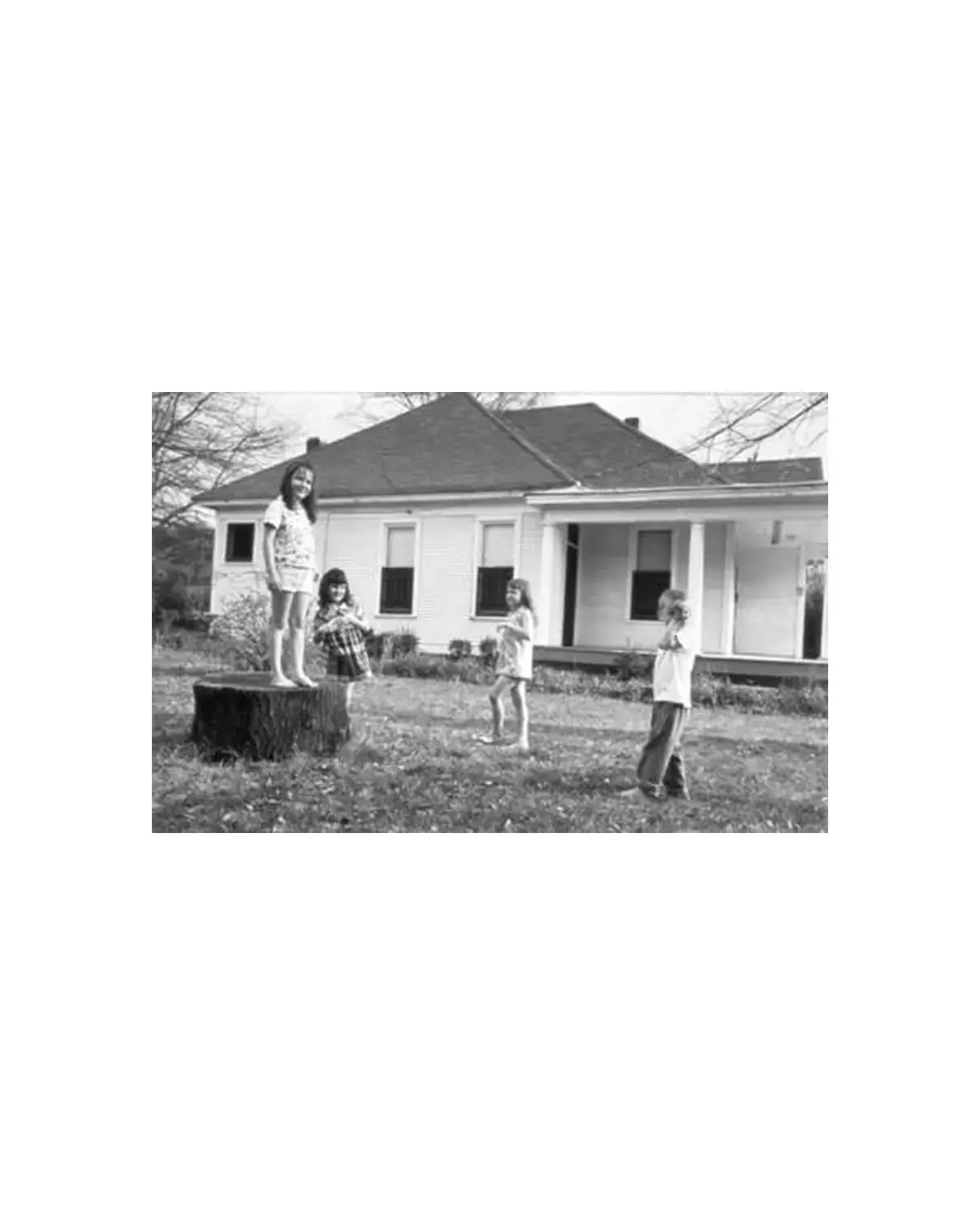
Known primarily for his color photography, that isn’t where Eggleston began. In the late 1950s, Eggleston wandered around the suburbs of Memphis shooting whatever caught his eye on high-speed 35mm black-and-white film: people, usually unaware or only just aware of the camera’s gaze; and places, including supermarket interiors and exteriors, roadsides, barbecue shacks, shop windows, garages, diners, hotel rooms, crossroads, bushes, trees and fences. Images such as this illustrate Eggleston’s “democratic gaze:” everything, even the most banal-seeming subject, is given equal importance in the unfolding visual narrative. His black and white photographs also shed new light (as it were) on the so-called “snapshot aesthetic” that the Eggleston, Stephen Shore and before them Robert Frank deployed. The art critic Dave Hickey argues that, in Eggleston’s work, there is “no other honest option” but “to make ‘bad’ pictures of bad places.” Eggleston, Hickey writes, “abandons composition for a world with no composure. The truth of formal arrangement, contrast and atmosphere would be a lie imposed on these settings. It would deaden the acidic essence of the subject matter.”