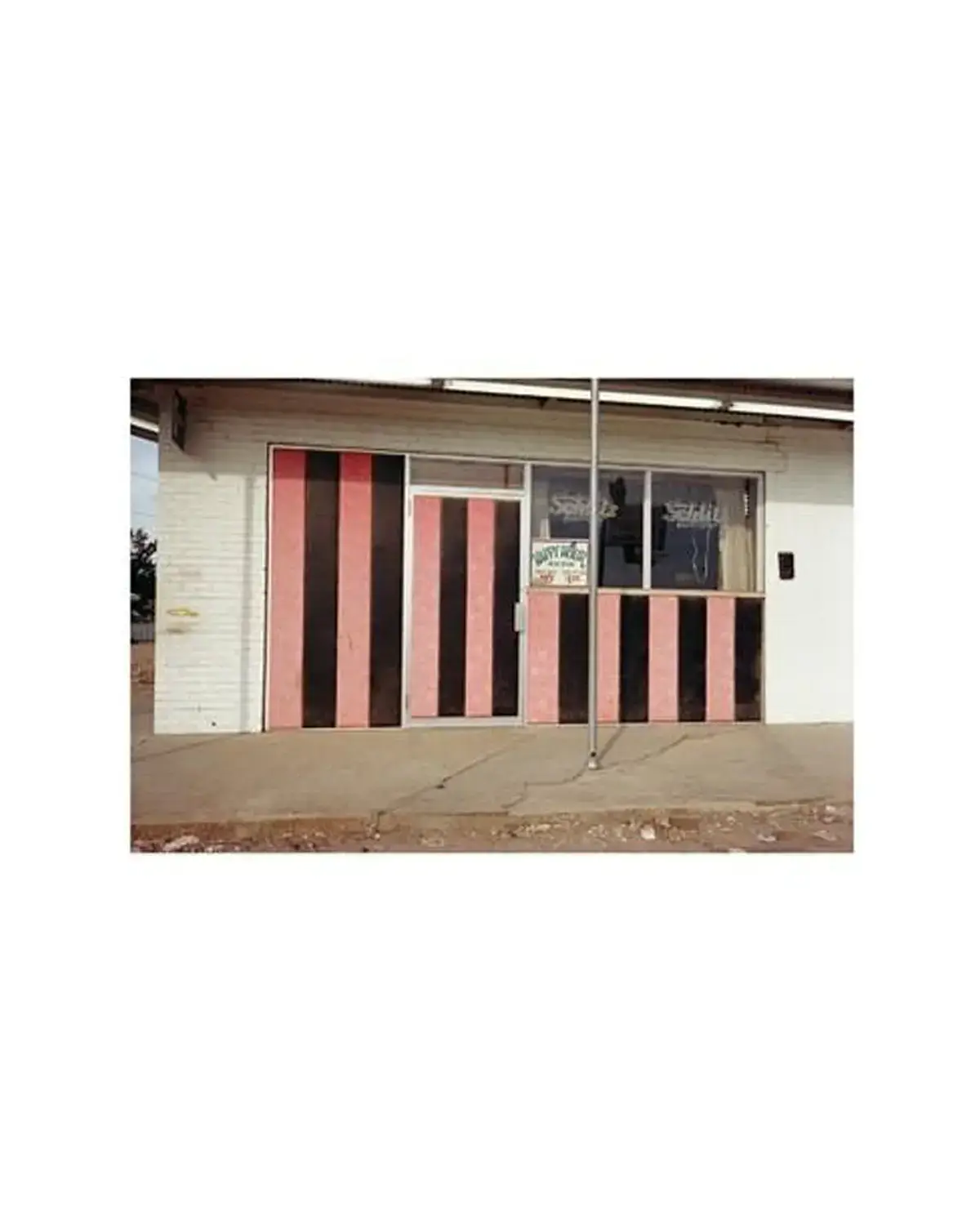
“I had this notion of what I called a democratic way of looking around, that nothing was more or less important,” Eggleston once said. This radical attitude guided his ground-breaking work in color photography, work that has prefigured many recent developments in art and photography. Los Alamos contains a blueprint of Eggleston’s aesthetics, his subtle use of subdued color hues, the casual elegance of his trenchant observations of the mysteries of the mundane. The photographs in Los Alamos were shot in Eggleston’s native Memphis and on countless road trips across the American South from 1964 to 1968 and from 1972 to 1974. Eggleston began Los Alamos ten years before his solo exhibition at MoMA in 1976, which placed color photography on the map as a serious art form. At the time, color photography in the fine arts was regarded as frivolous, or even vulgar. It earned Eggleston the scorn of many. However, this did not stop him from experimenting with the no longer used dye-transfer process, a labor-intensive and expensive technique that was mainly used in advertising photography. The process allowed the photographer to control the color saturation and achieve an unparalleled nuance in tonality.