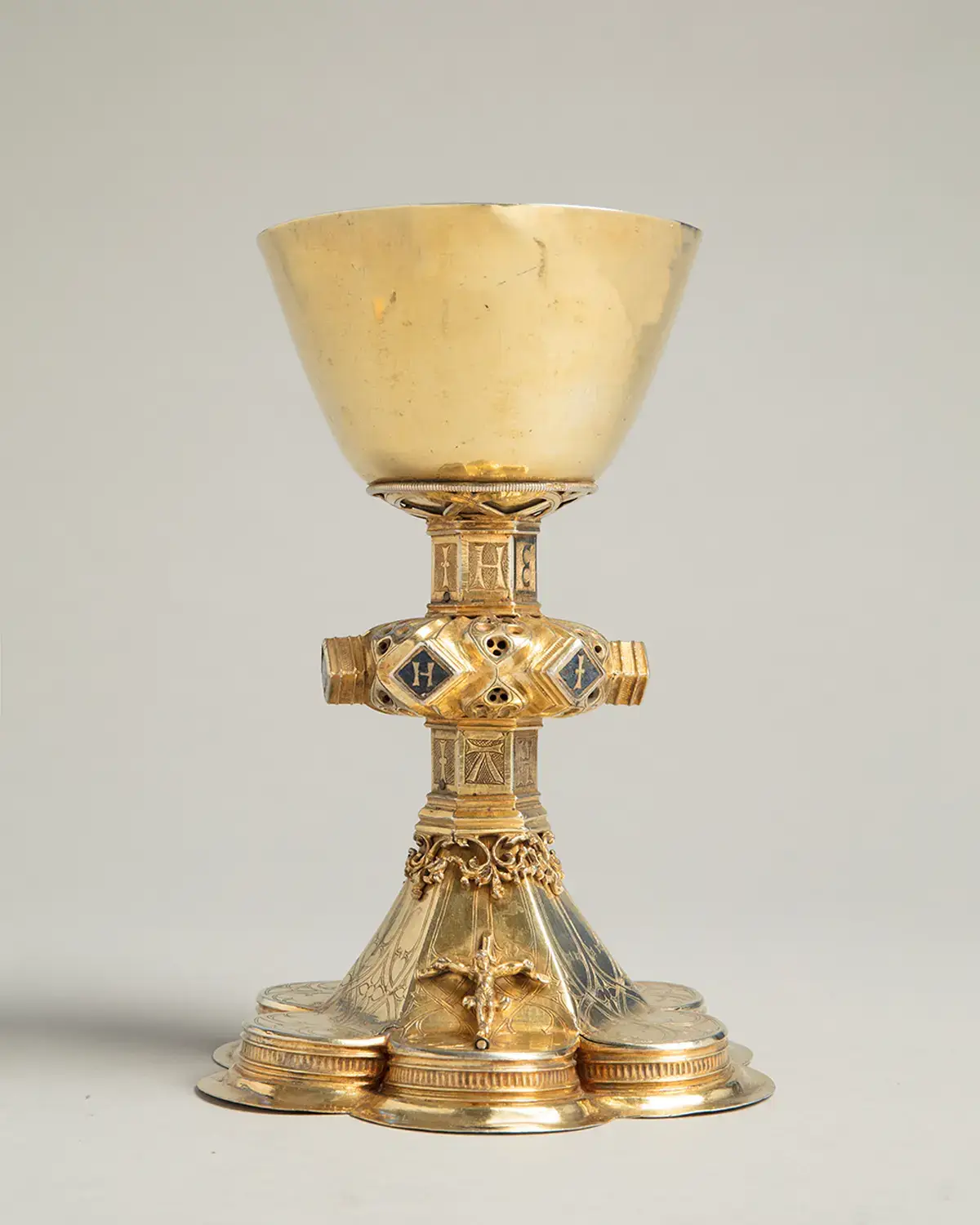
The chalice is the most important liturgical object used in Christian worship, and for centuries it has been given a central place on the altar table. Its form directly references the vessel used by Christ during the Last Supper when, according to the Matthew 26:27–28, he “took the cup, gave thanks, and gave it to his disciples, saying: Drink ye all of it for this is my blood of the new covenant, which is shed for many for the remission of sins.” Since in the Catholic faith, the moment of transubstantiation is believed to occur while the chalice is filled with the Communion wine, such vessels have historically been created using the richest, most precious materials available to the church and its craftsmen. This chalice, with its flaring, hexafoil foot, slender stem punctuated at its center with a rounded knop, and tulip-shaped calyx or bowl, accords closely with the fashion for such vessels in Northern Europe during the first decades of the sixteenth century. The prominent placement of the Crucifix, cast in relief and held in place by way of flanged pins passed through the foot, is a common feature of Medieval chalices and was entirely appropriate to its use at the altar. Less common however are the delicate engraved tracery designs, which crisscross over each of the foot’s six faces and give it an architectonic character.
Note that in practice, the priest presiding over Communion would drink out of that portion of the bowl directly above the Crucifix, i.e., with the Cross facing him. In wiping the bowl afterwards, the same spot would be repeatedly rubbed, probably with a certain vigor. Over lengthy use in worship, that part of the bowl would wear so thin that a hairline crack would appear. That is the case with this example, indicating that the bowl is original to the chalice, as distinguished from other examples where the bowl has been replaced and, such repair by definition being more recent, has not yet developed a fissure through extended use.