The Aardt Foundation’s founder, Michael Straus, has been actively involved in writing and researching the art historical contexts of the works in the Foundation’s collection; and has written reviews of exhibitions, been involved in court cases on the part of artist foundations concerning the scope of artists’ freedoms, and published interviews with a number of artists in the collection. In that connection he is a writer-at-large for the Brooklyn Rail, where a number of these works have been published and may also be accessed in this section.
Charles Ross is a pioneering member of a group of artists generally based in the West who explore light-driven relationships between objects and our perception, sometimes working in such varied media as acrylic and epoxy, sometimes utilizing utilitarian materials such as neon or fluorescent lights, and sometimes relying on the very movements of the Earth and the stars. But he also engages in a particularly unique way with the land itself, literally, as he says, “entering the Earth in order to reach the stars.”
Laddie John Dill is an LA based artist who was at the forefront of the “Light and Space” movement in the late sixties. In 1971 he had his first solo show at Ileana Sonnabend’s gallery in New York City. Since then Dill’s work has been shown and celebrated internationally. Early in the fall Michael Straus spoke with Dill on the occasion of the artist’s exhibition at Malin Gallery. The conversation that follows touches upon Dill’s early artistic development, his work as an educator, and his careful consideration of how architecture functions in the context of his sculptures.
“So the basic question is: Why am I interested in things that either have no edges, or have images that appear, distort, and disappear? It perhaps has to do with the ephemeral quality of life.”
De Wain Valentine has long been a pioneering artist based in Southern California, most known for his evanescent and light-transforming sculptures cast in polyester resin.
I first met Keith Sonnier several years ago on a party ship that was hired to follow a tugboat around Manhattan as it towed the first realization of Robert Smithson’s Floating Island.
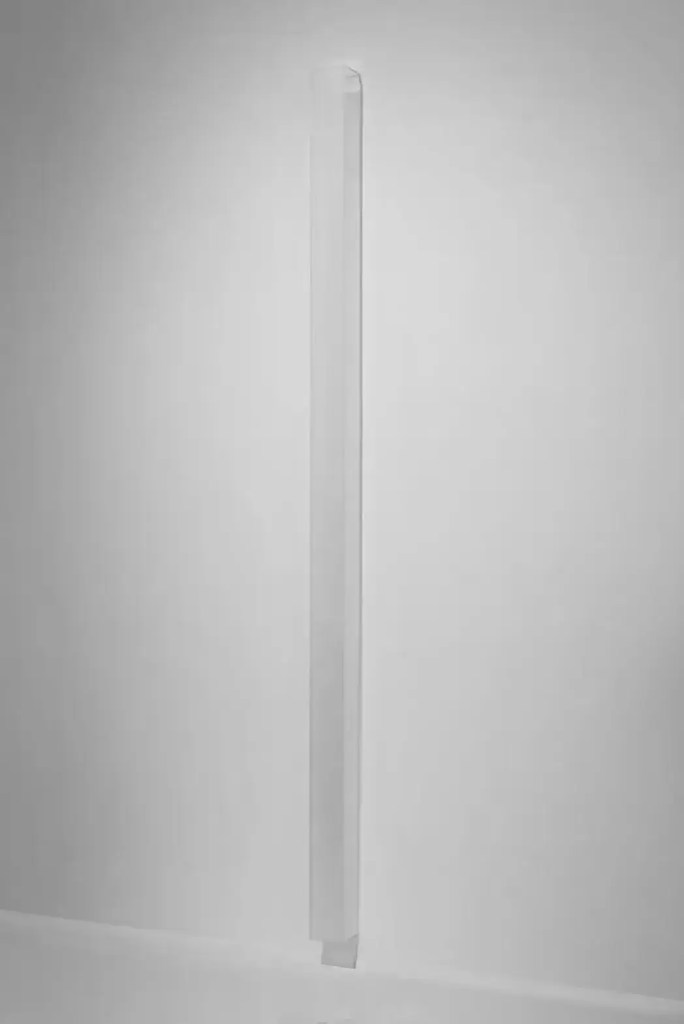
Spaced at generous distances along the walls of Franklin Parrasch’s cleanly-renovated Upper East Side townhouse, nine of Ron Cooper’s lacquered Plexiglas Vertical Bars, each 8’ x 3 5/8” x 3 5/8”, stand guard over the mute transmission of light passing through the gallery’s lavishly open space.
After a full week of helter-skelter sprints through eye-numbing mounds of maze-like fairs blistering not only my feet but also my admittedly limited ability to grasp the myriad aesthetic sensibilities of artists young, old, and dead, I had a Keatsian moment of Pacific pure serenity when silent, within a Chelsea gallery, I stared at Nicolas Trembley’s perfectly curated show, Mingei: Are You Here?
Taking its title from a line from the Neil Young song “Don’t Let It Bring You Down,” this group show at the split-level gallery ROOM EAST is anything but a downer. Kudos go once again to gallery owner Steve Pulimood for the brainy discipline that has come to typify both his selections and installations in this admittedly difficult space, where the relatively small “upstairs” room confronts you immediately at the top of the bend of a narrow set of stairs and the “downstairs” room is even more constrained, virtually sharing its space with the gallery offices.
The case between the artist Patrick Cariou and Richard Prince continues to wend its way through the courts, holding both promise and risk for artists and museums and others who support the arts. In a nutshell, and as is well-known, Cariou published a series of photographs he took of Rastafarians in a book titled Yes, Rasta (Powerhouse, 2000). Prince came across the book in a bookstore; utilized various of the images, or parts of the images, in collaged and otherwise newly-created paintings for a series of 30 works titled Canal Zone.
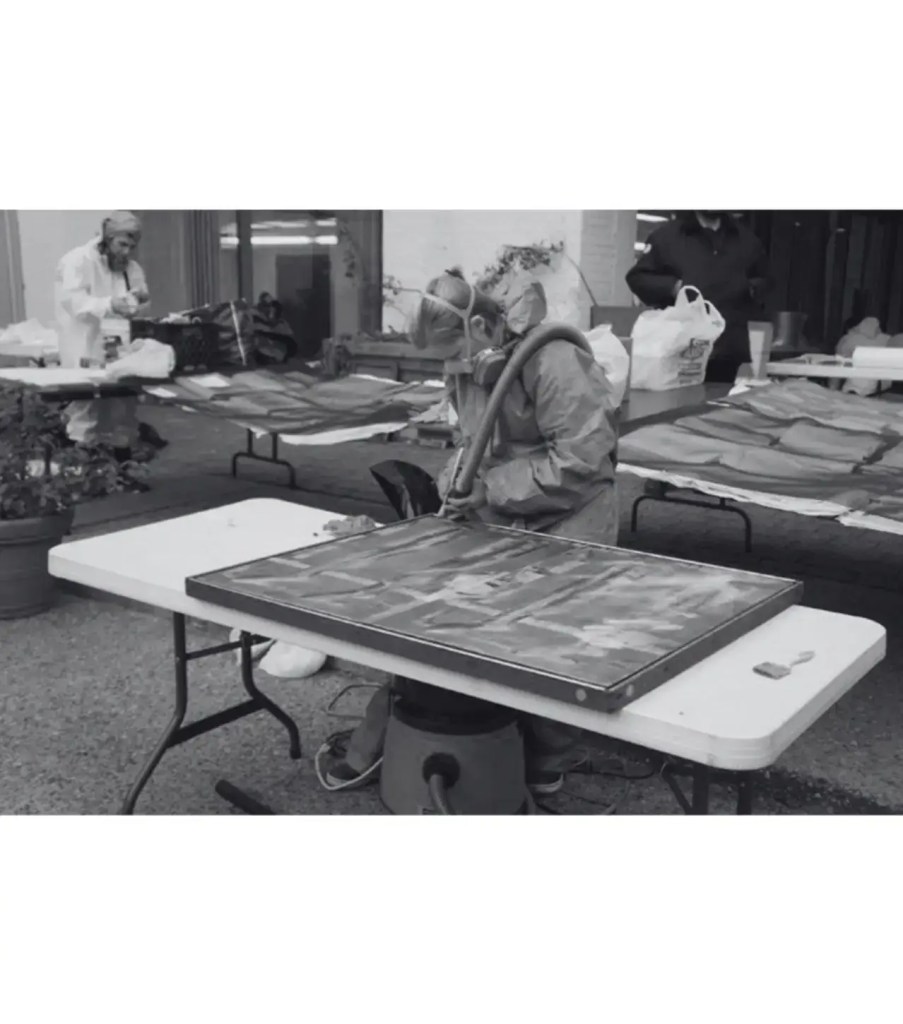
As is well known, last year’s Hurricane Sandy had a devastating impact on the New York region, leaving in its wake a wide range of personal and property loss, with over 70 dead and some $50 billion in economic losses. Included in the latter are extensive, but difficult to value, damaged or destroyed artworks, as well as damaged studio and gallery spaces. The widespread art-related losses incurred in the storm, by definition, take a second place to injuries, deaths, and loss of homes. But now that one year has passed and the scope of the damage has become much clearer, we think it would be useful to make some observations concerning ways in which artists and galleries might have been better safeguarded against those losses.
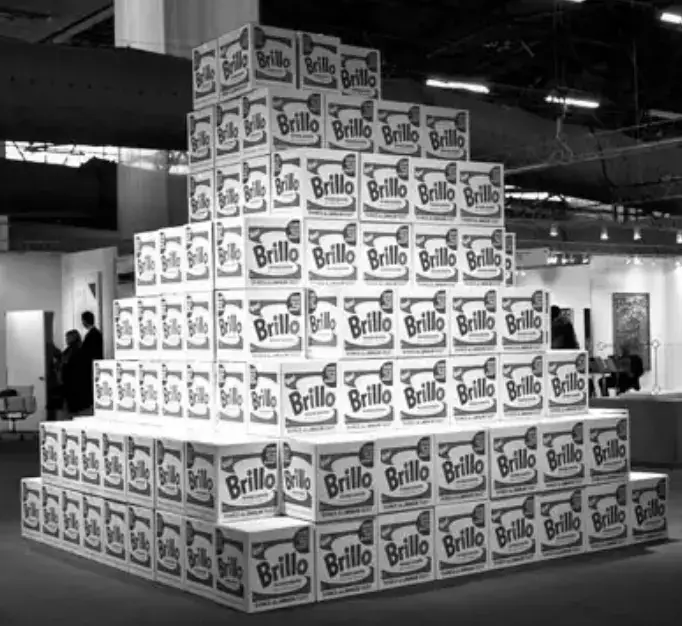
Visitors to this year’s Armory Show in New York were treated to that rarest of opportunities in the current art world: free artworks, in this case the artist Charles Lutz’s exact replicas of the 500 cardboard Brillo Soap Pad cartons that Andy Warhol had the Brillo Manufacturing Company ship from Brooklyn to Stockholm for the opening of his show at the Moderna Museet in 1968. Each visitor to the Armory was invited to take a box; and the fair’s aisles, booths, coat check rooms and other nooks and crannies were soon awash with these unwieldy but cheerful objects, each bearing Lutz’s signature.
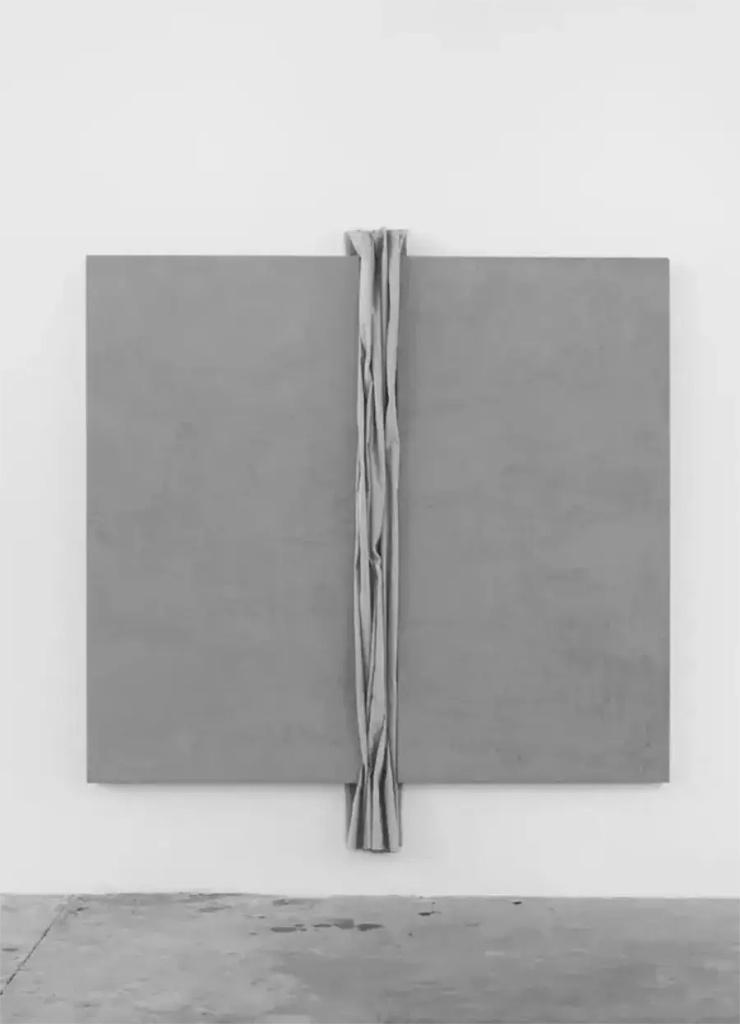
In her first solo show, N. Dash presents a body of work comprising both wall pieces and photographs, wherein she expands upon her longstanding interest in deconstructing the traditional boundaries separating image from support in painting and sculpture. For Dash, this pursuit is ongoing, as evidenced by earlier pieces included in recent group shows at Tanya Bonakdar, Peter Blum, and Nicole Klagsbrun. In this previous work (some of which, for full disclosure, I own), Dash hand-dyed cloth with indigo and draped it over varied supporting structures; or she repeatedly handled paper while traveling to and from her studio, “sealing” the resulting worked objects by rubbing them with graphite powder or pigment, and hanging them directly on the wall with exposed nails; or she shaped cylindrical forms of rubbed paper finished with indigo dye, again wall-mounted; or she made unique photographic prints of banded light and shadow, created in the darkroom through the touch of her hands rather than the mechanics of a camera.

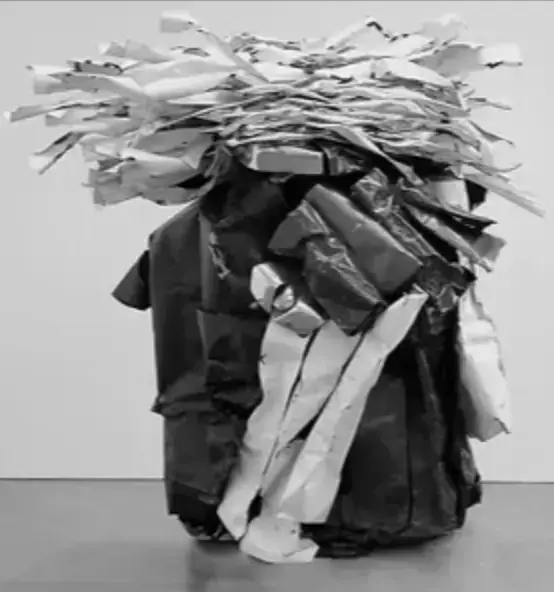
Despite Roberta Smith’s gushing review of this show—finding the works “stately,” “architectural,” fairly “erupt[ing]” from the gallery’s floors—my own feeling was, “Poor John Chamberlain, how did he fall so far?”
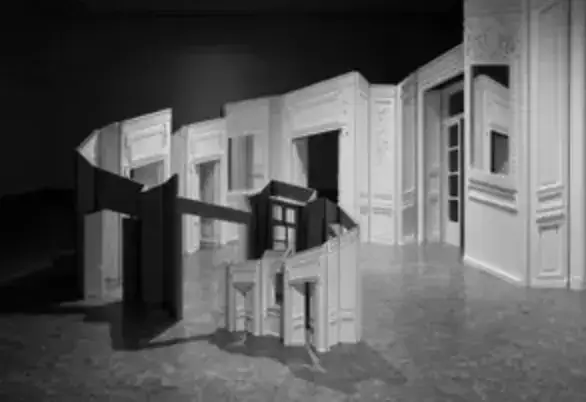
Katrin Sigurdardottir’s current solo exhibition at the Metropolitan Museum of Art is part of the museum’s continuing series featuring the work of contemporary artists at mid-career—others in the series include Tara Donovan and Kara Walker. The exhibition, up through May 30, 2011, and curated by Anne Strauss, in fact consists of two installations, both riffs on 18th century wood-paneled rooms (known as “boiseries”), formerly part of private homes (well, palaces) in Paris, and now preserved as part of the Met’s Wrightsman Galleries. Sigurdardottir is well-known for a signature series of hand-crafted wooden boxes that unlock and fully unfold to reveal miniature, railroad-style landscapes that are deliberately elusive as to their source or location.
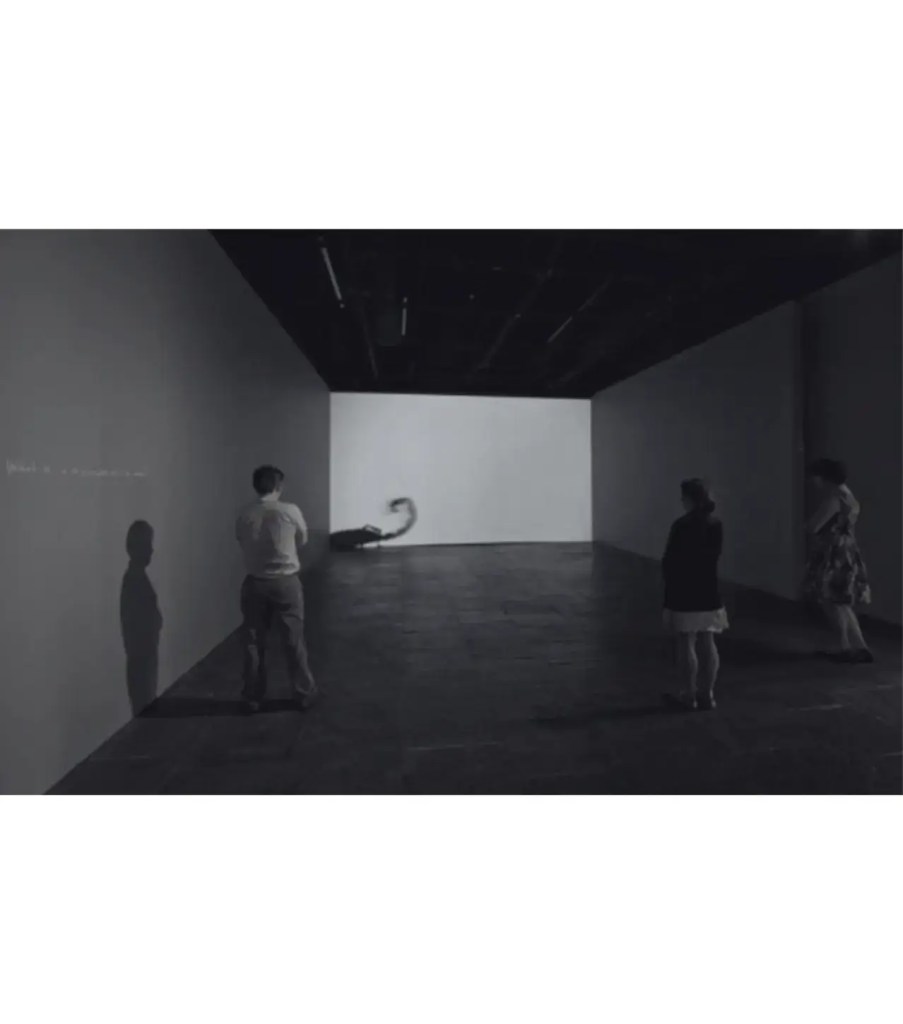
If you needed any extra evidence that the Bush Administration lost all sense of decency in its pursuit of information believed to be hidden in the minds of terrorist suspects, then go see Jill Magid’s chilling installation, A Reasonable Man in a Box, curated by Chrissie Iles in the Whitney Museum’s first-floor gallery space.
Jill Moser’s second show at Lennon Weinberg represents an expansion and development of the “compression and release” style that is something of her signature.
This article is about a specific art object, one that bears accession number 14.130.12 at the Metropolitan Museum of Art. It has two handles, an opening at the top, and a body that bulges out from the neck and then tapers towards the bottom. It is, therefore, an amphora, but not just any amphora.