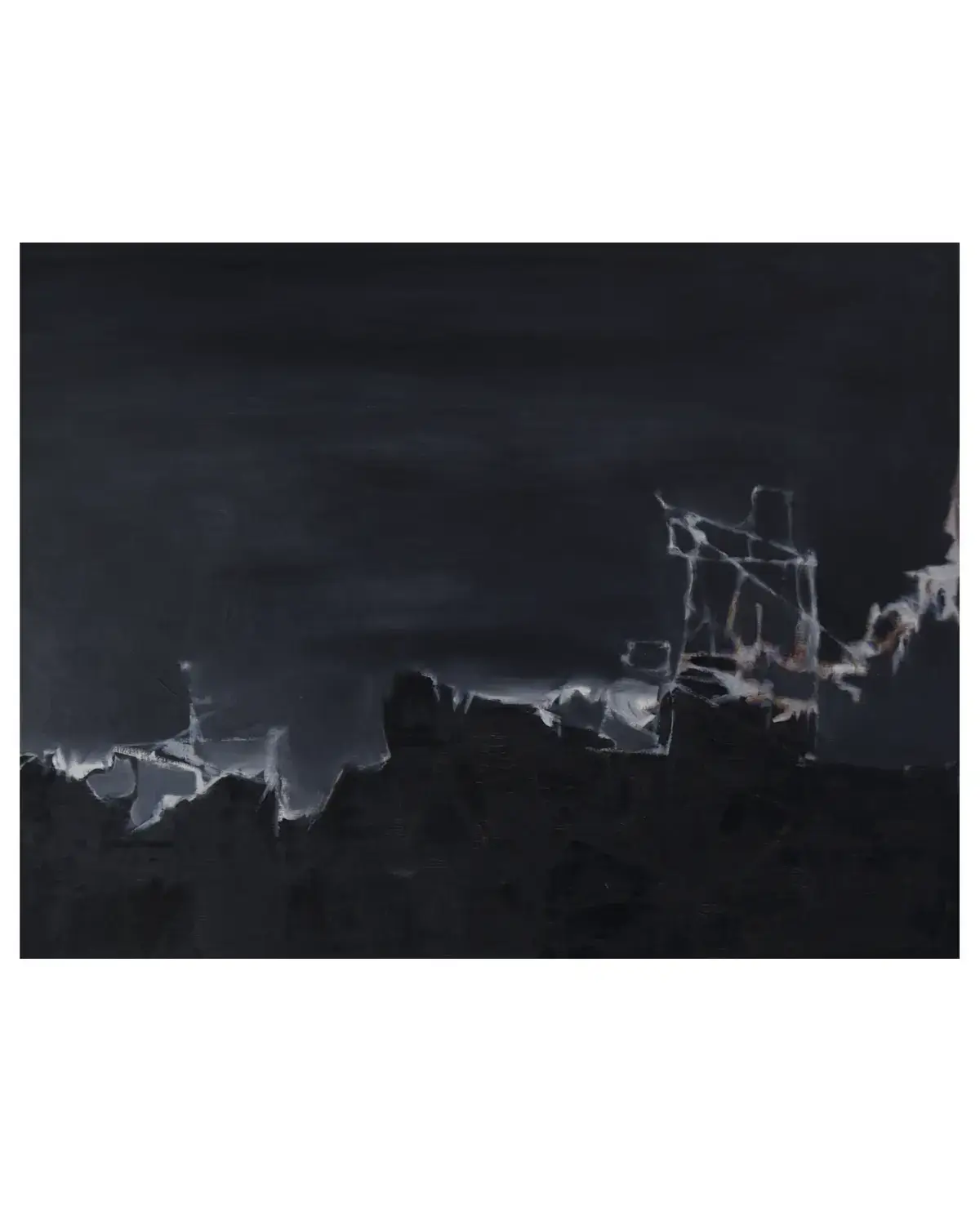
Boardman’s paintings, from the late 1940s across the turn of the millennium, were shaped by his responses to the major currents of twentieth century abstraction and the aesthetic turmoil of successive art movements of his time. Throughout his work, we observe a particular dynamic in his exploration of the potential vastness and all-inclusiveness of abstraction and his search for systematic and personal formal strategies to give definition and meaning to his paintings. He responded to the challenge by establishing the primacy of his works’ defining visual structure, often relying on sharply articulated geometric principles and shapes, even as he affirmed the personal presence of the artist through subtle and nuanced means. In some cases amorphous forms, some still suggesting figurative presences, float or barely emerge from a freely brushed ground. Hilton Kramer, in his review of Boardman’s first solo exhibition in America at the Martha Jackson Gallery in 1955, saw the paintings as romantic and visionary landscapes and seascapes which made evident the painter’s “profound compositional instinct,” his “sense of abstraction.”