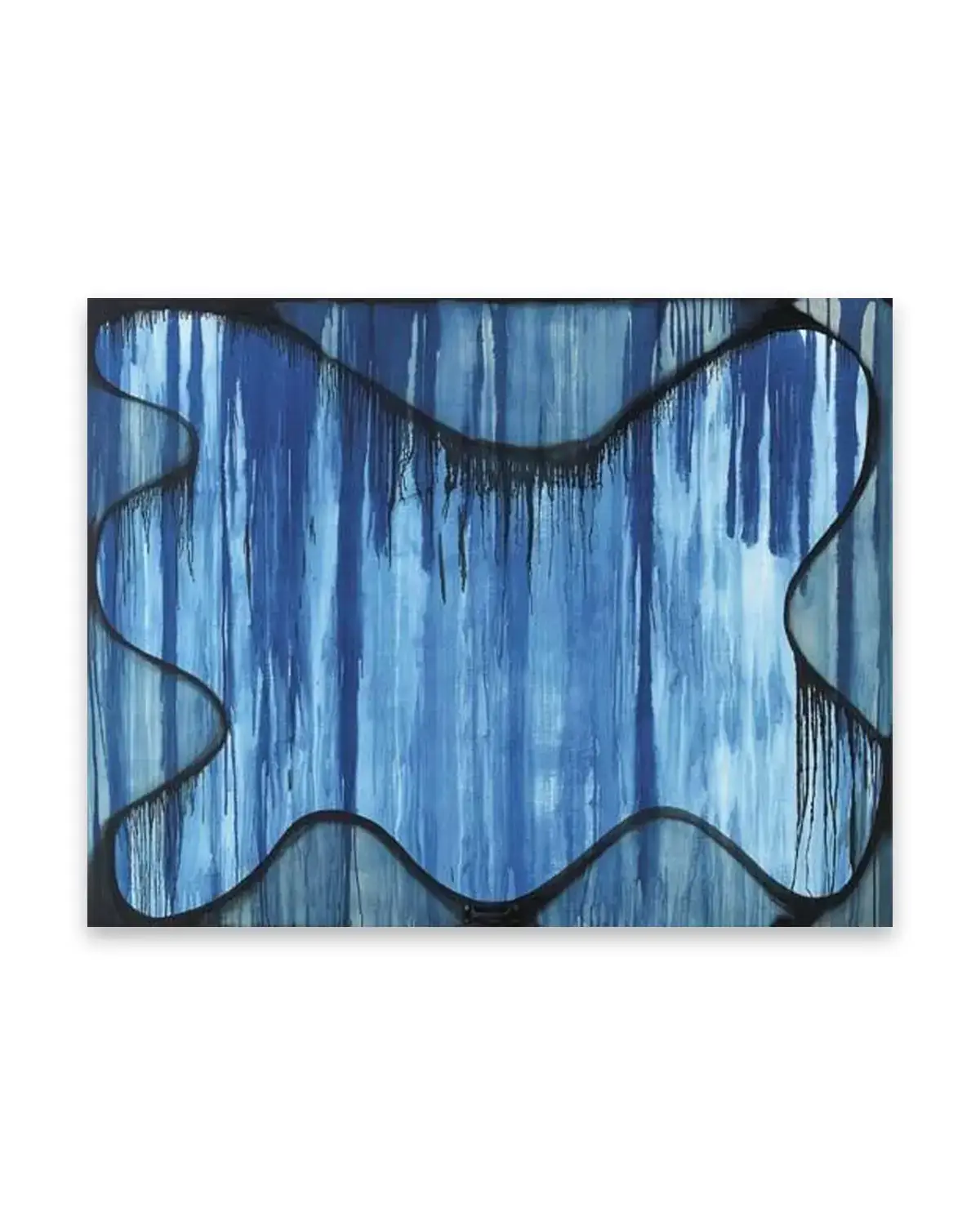
Dryer died in 1992 at thirty-four, leaving a body of work that has been slowly recuperated since the 2010s as curators and scholars have re-examined the painting of the late 1980s in New York for artistic concerns that fell outside the dominant narratives of neo-Expressionism and appropriation. Suburbia is among Dryer’s largest works and was featured in a retrospective at the Phillips Collection that sadly coincided with the COVID epidemic, such that it was seen by relatively few visitors, a particularly poignant circumstance given the artist’s own tragically short life. Dryer chose to work with casein, an unusual binder that dries to a matte, almost chalky finish recalling tempera, with enamel passages and a metal handle attached to the panel’s surface. The handle is a characteristically Dryer element: a functional object (a cabinet or drawer handle) embedded in a painting surface, converting the painting into something you might pull open, or life, as with a suburban garage door. The enamel surfaces introduce industrial smoothness against the casein’s absorbency. The work engages directly with the question of what a painting is as an object, a question central to the generation of painters formed in the wake of Minimalism.