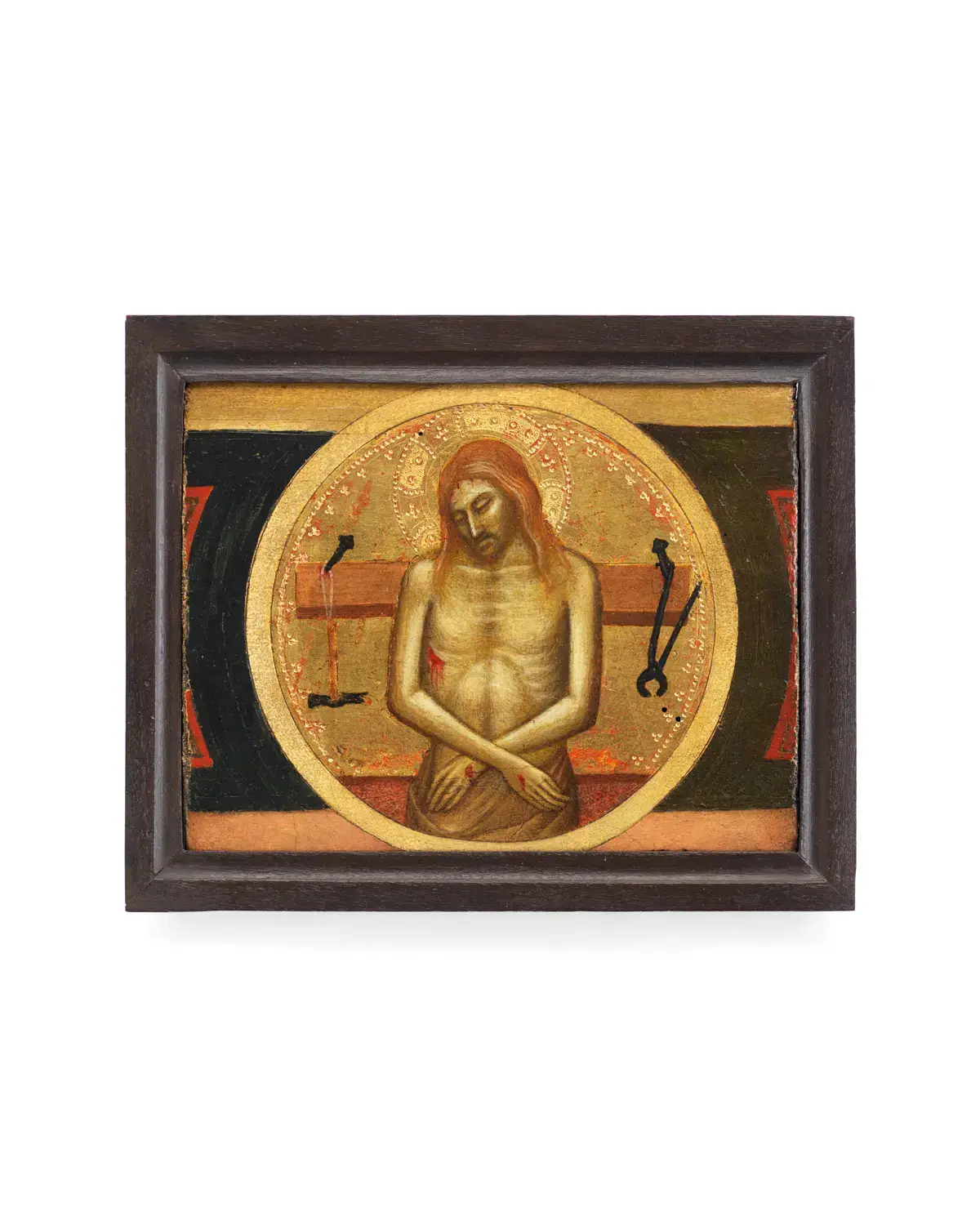
In the wake of the Black Death in 1348, the former priorities of pre-Renaissance Italian art were re-evaluated, as one third of the Italian population perished in two years. Surrounded by death and sometimes unable to even bury the dead, Europe underwent a wave of religious revivalism that, among other things, emphasized the need for repentance. Italian art, and especially that in Florence, changed course with the rise of popular religious movements such as the Flagellants, where the need for Divine compassion produced works of grace and intense devotional imagery with an increasing focus on mortality. Forgotten for a generation was the vivacious realism of Giotto and his followers. It is in this context that Matteo di Pacino paints this panel of Christ as the Man of Sorrows in Florence around 1370.