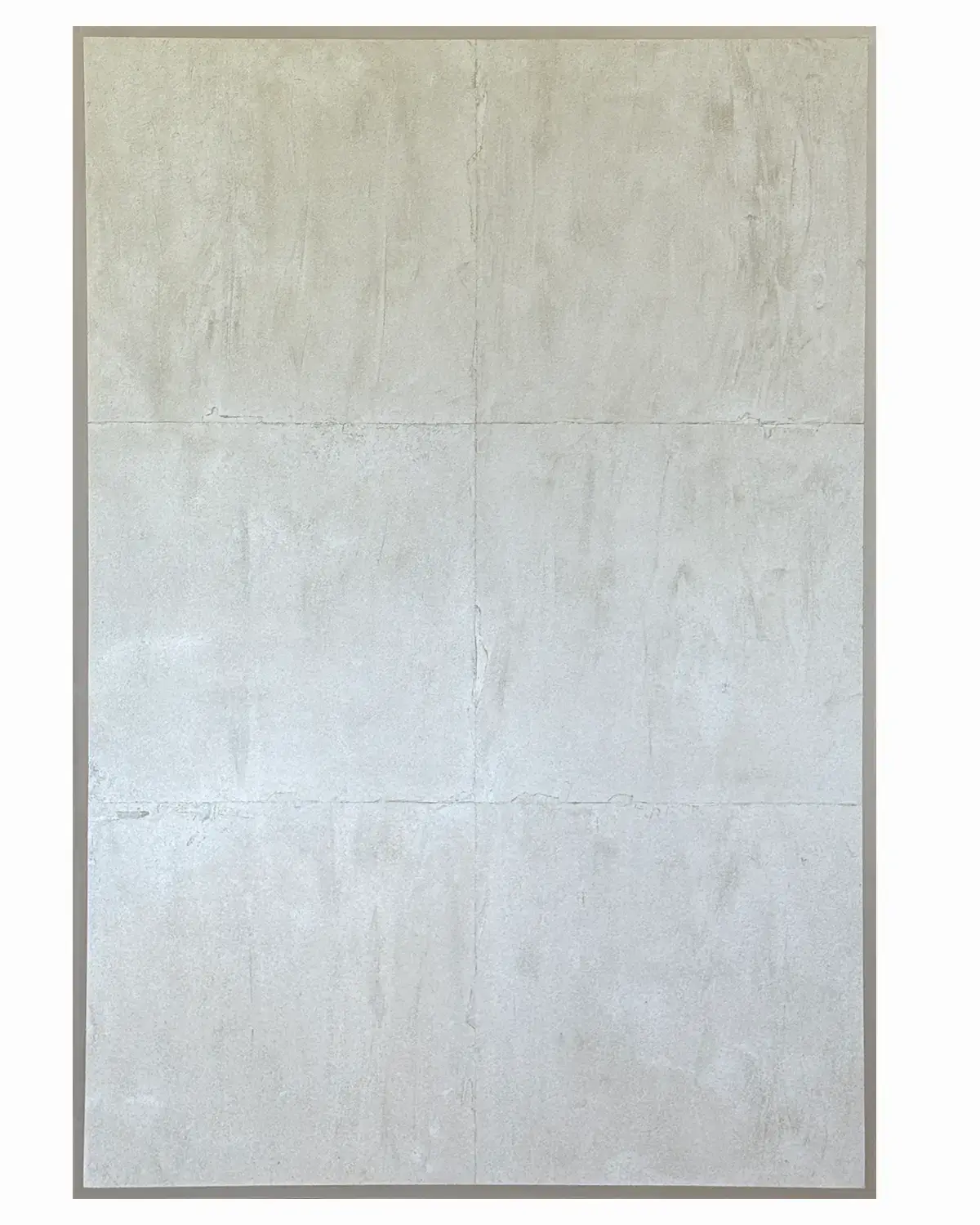
“I always thought that the essence of painting is not about the paint,” Mary Corse has said. For more than 50 years, Corse has used painting as a conduit for exploring the potential of light and perception. Dedicated to imparting luminosity into her works through innovative methods and materials, Corse creates paintings that employ light as their primary subject and material. Beginning in 1968 with her White Light series, Corse combines manufactured glass particles and paint in order to create a technologically advanced mixture capable of harnessing and refracting light off the object’s flat surface. In doing so, Corse defies the traditional conventions of the two-dimensional canvas, and generates an energy that extends beyond the paintings’ surface. This work continues the series, the first is in the collection of the Museum of Modern Art.
The White Light paintings exemplify the ways in which Corse responded to the local environment and infrastructure of the L.A. art scene, the concept for them emerging from a sunset drive down the highway: “I was in Malibu,” Corse recalls, “the West was behind me and everything was lighting up.” In awe of the luminosity generated by highway lane markings, she discovered that she could achieve a similar sense of radiance in her paintings using artificial rather than natural light. To produce this glowing effect in her paintings, she began employing the glass microspheres that the L.A. Department of Transportation used in signage and highway markings. Corse scatters the microspheres across the canvas and incorporates them into her mixture of white acrylic paint and gesso using a heavy-duty brush. The curved surface of the glass collects the light rays onto the painting’s surface and deflects the light toward a common focal point, in this case, the viewer’s eye. As you walk around her white canvases, the painting’s surface appears to glimmer and shift in response to the changing relationship between it and the observer. “When I put in light and the brushwork, the viewer’s position and movement actually creates the painting,” the artist notes.