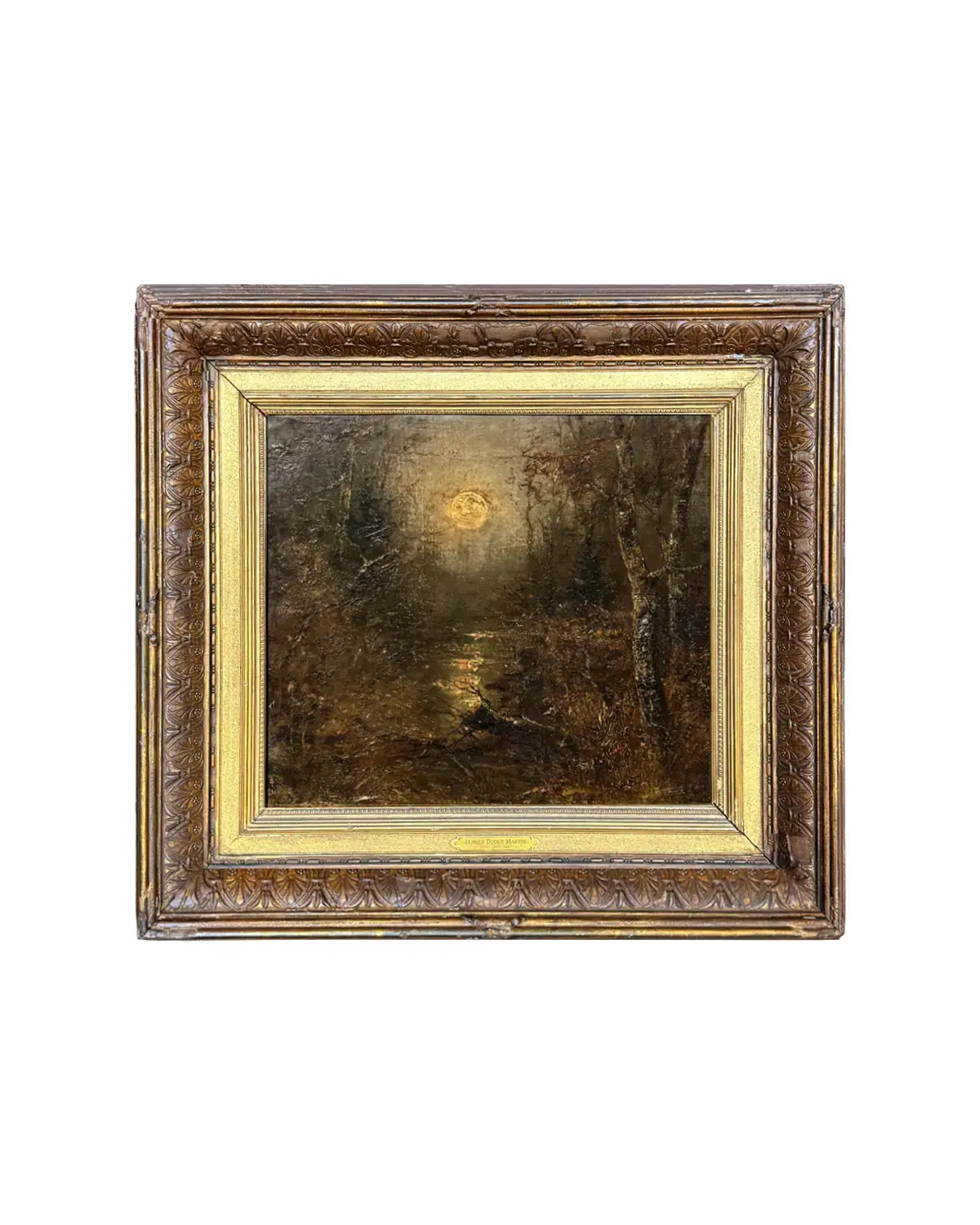
A transitional figure in American landscapes during the second half of the 19th century, Homer Dodge Martin links the painters of the Hudson River School to the American followers of the French Barbizon artists and eventually Impressionism. While his early work was typified by more precisely-painted, Hudson River style landscapes, in his travels abroad the artist became familiar with the work of French artists Camille Corot and Eugene Boudin. He later adopted the looser brushwork and relaxed compositions of these artists, earning him the label of the “first American impressionist.” Like many American painters in Europe at this time, Martin fell under the influence of the proto-Impressionist Barbizon school, which favored quickly executed on-site sketches over the detailed, studio-painted inventions of the Hudson River school. Thereafter his painting style gradually became darker, moodier, and more loosely-brushed, as exemplified by this painting.