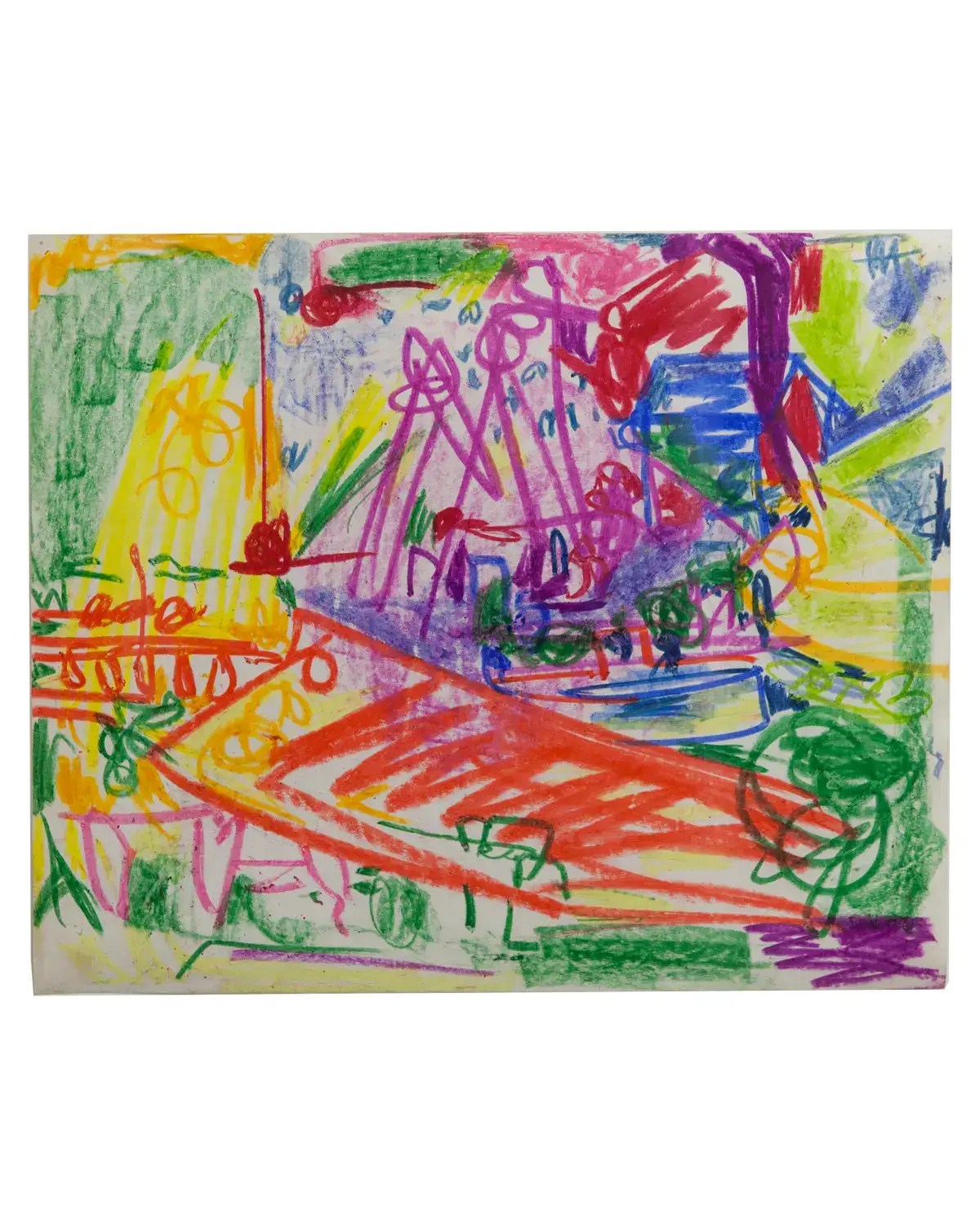
Reviewing the most comprehensive retrospective exhibition of works on paper by the Abstract Expressionist Hans Hofmann, a 2017 show at Museum of Contemporary Art Jacksonville, the art historian Robert Hobbs commented on the impact of the Surrealism to which Hofmann was first exposed during his European years as the source of his mature and far more abstract style. He points out that “the poet leader of this international group, André Breton, defined Surrealism in terms of heightened contrasts between two or more distant realities to achieve vital and surprising flashes of insight, after an initial period of free association.” As relevant here, Hobbs then noted that “Hofmann’s magisterial set of improvised, colorful crayon-and-ink scenes of Provincetown, Massachusetts’ traditional New England architecture, bay and sailing vessels that he created between 1941 and 1943 – certainly the highlights of this exhibition – aggressively contrast the disparate realities of representation and abstraction in works notable for their raucous and unabashed color.”